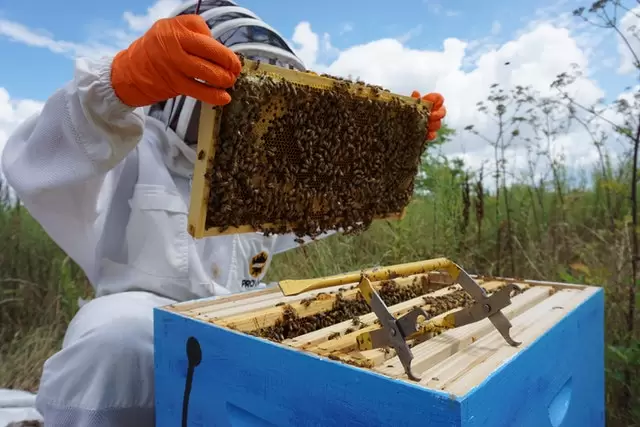
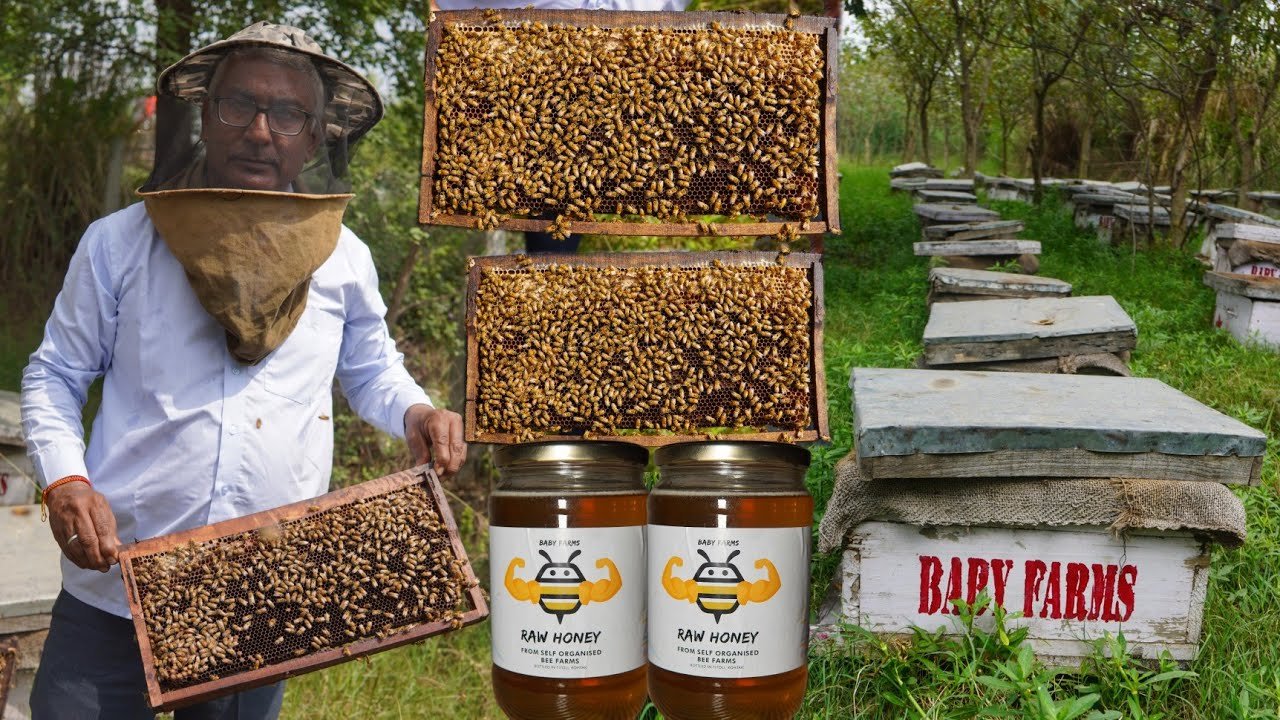
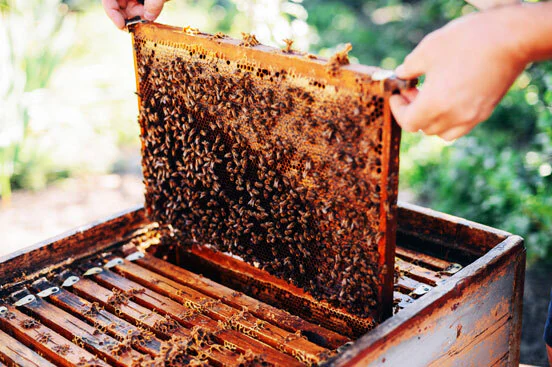
Honey farming, also known as apiculture, represents one of the most sustainable and synergistic practices in agriculture. It is a system where nature, humans, and the ecosystem work in perfect harmony. The synergy in honey farming arises from the interconnected relationship between bees, plants, and human involvement — creating a cycle that benefits all.
Bees are nature’s most effective pollinators. When they collect nectar to make honey, they simultaneously pollinate flowers, fruits, and vegetables, ensuring higher crop yields and better-quality produce. This natural synergy between beekeeping and agriculture significantly enhances food production without the need for chemical fertilizers or artificial processes. For farmers, integrating beekeeping with crop cultivation can boost productivity by up to 30–40%. Crops such as mustard, sunflower, coffee, apple, and litchi benefit immensely from bee pollination, showing that honey farming not only produces honey but also improves biodiversity and agricultural sustainability.
From an economic standpoint, honey farming creates multiple revenue streams. Besides honey, bees produce wax, royal jelly, propolis, and bee venom — all of which have applications in pharmaceuticals, cosmetics, and food industries. This diversification provides stability to rural economies, particularly for small-scale farmers and entrepreneurs. Modern apiculture techniques, combined with organic farming and digital marketing, have further expanded the global reach of honey-based products, making it a viable business even for individuals with limited land resources.
Environmentally, honey farming plays a vital role in maintaining ecological balance. Bees help maintain the health of forests and wild plants, contributing to soil fertility and biodiversity preservation. Unlike other agricultural activities that may deplete natural resources, beekeeping encourages conservation and harmony with nature. Moreover, as awareness about sustainable living increases, honey farming is emerging as a symbol of green entrepreneurship — a way to earn while protecting the planet.
In essence, the synergy of honey farming lies in its ability to connect economic growth, environmental conservation, and agricultural sustainability. It is a low-investment, high-impact practice that supports farmers, strengthens food security, and nurtures nature’s delicate balance. By promoting and adopting honey farming, societies can move toward a more sustainable and prosperous future — one where humans and nature truly thrive together.